

Robotic surgery with advanced precision
The implementation of robotic surgery in oncology has had a fascinating development. Today, every advance is focused on the pursuit of excellence, and in recent years this technology has been a fundamental tool for the care of our patients.
Areas such as colorectal surgery, gynecologic oncology, and urologic oncology have demonstrated benefits in recovery, greater precision, and better oncologic control. However, its use is not limited to these diagnoses, and each day its use expands.
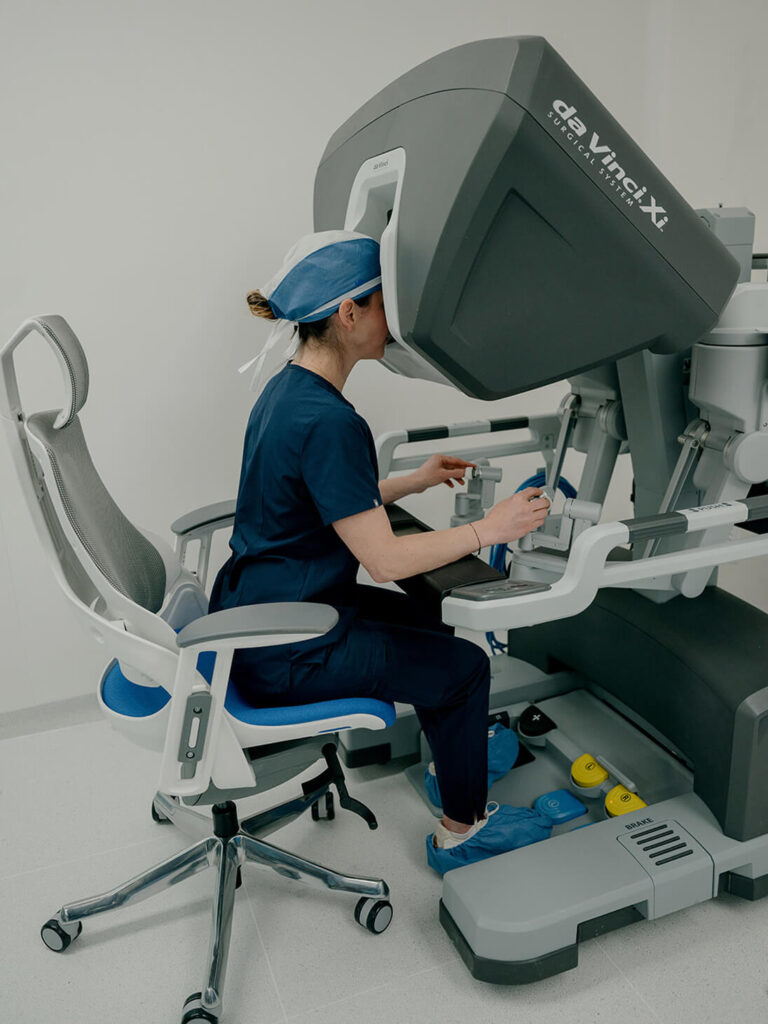
What is robotic surgery?
Robotic surgery is an advanced, minimally invasive approach that allows surgeons to perform complex procedures with greater precision, control, and flexibility than traditional techniques. Using a robot-assisted platform, the surgeon operates from a dedicated console, viewing the surgical field in high-definition 3D and guiding a set of articulated instruments with extreme precision.
This technology does not replace the surgeon—it enhances their capabilities. Every movement is completely controlled by the surgeon and translated into refined, tremor-free micro-movements inside the body. This allows delicate operations to be performed through very small incisions, reducing trauma to surrounding tissues and promoting faster recovery, less pain, and fewer complications.
Robotic surgery is used across multiple specialties, offering patients a safer and more precise alternative without compromising surgical effectiveness. It provides the benefits of modern medicine with a focus on comfort, safety, and long-term outcomes.
How does robotic surgery work?
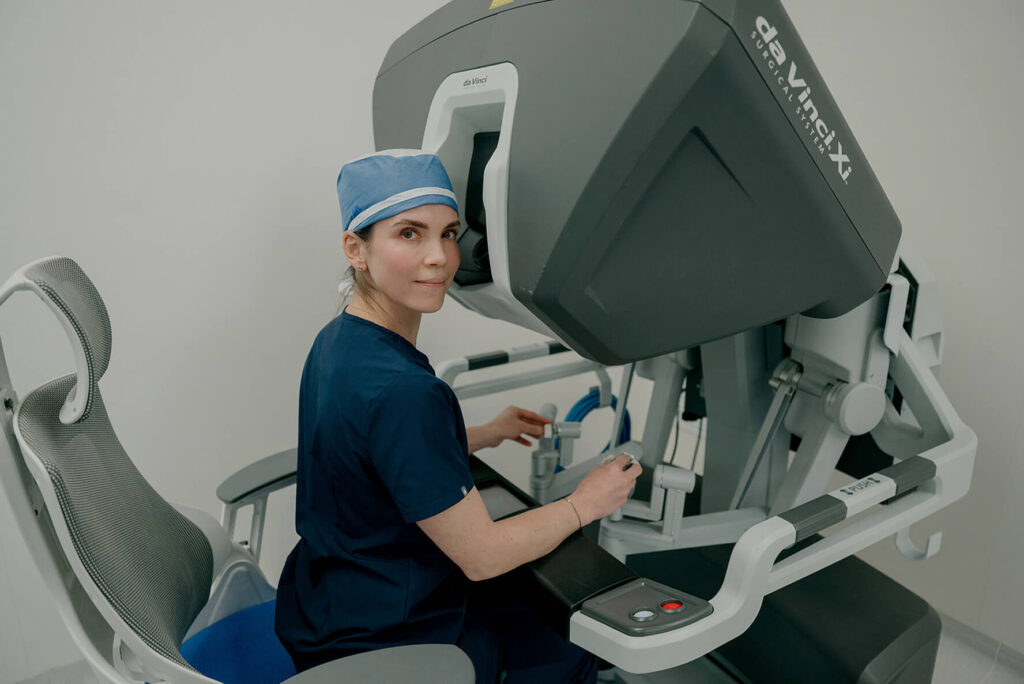
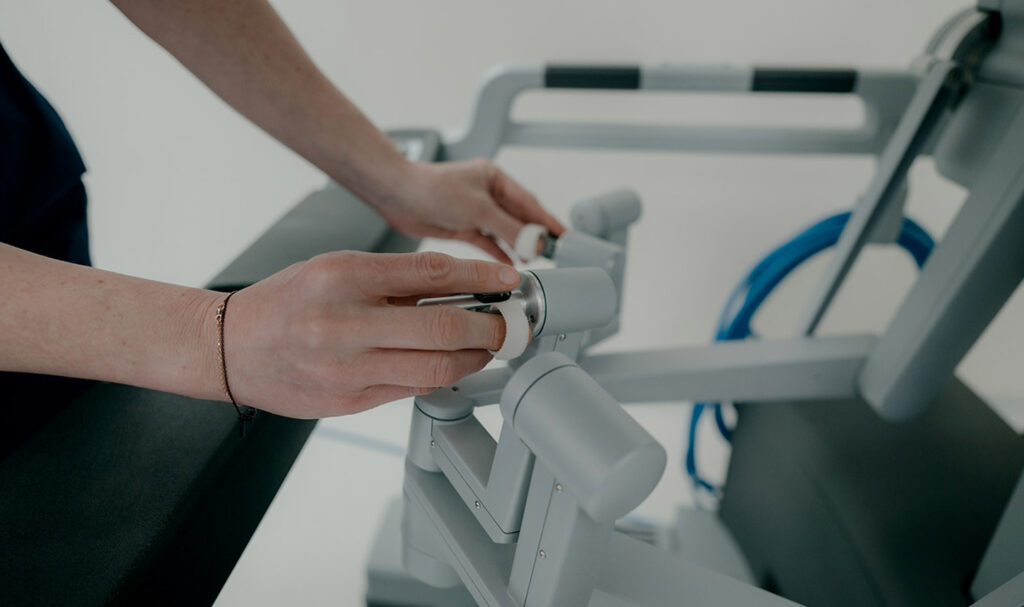
Robotic surgery uses the Da Vinci system, a platform that allows the surgeon to perform extremely precise movements through small incisions and working channels. The robot does NOT operate on its own: every gesture is controlled by the surgeon in real time.
Its use involves a high-definition 3D camera that provides magnified and more detailed vision. It also uses articulated robotic arms with movements that are broader and more precise than those of the human hand. The surgeon works through a console, directing every movement of the operation with greater stability and precision.
What conditions can be treated with robotic surgery?
In reality, a large majority of diagnoses can be treated with robotic surgery; however, individual factors are always taken into account to determine whether it is the best approach for you. Among the diagnoses most frequently treated with this technology are: colorectal cancer, endometrial cancer, gastric cancer, renal cancer, and prostate cancer.
However, it is important that you know that the precise indications will depend on a comprehensive evaluation.
Colorectal cancer
Endometrial cancer
Selected gynecologic cancers
Gastric cancer
Kidney cancer
Head and neck tumors
What are the main benefits of robotic surgery for me?
The benefits of robotic surgery in oncology are extensive: faster recovery with small incisions and less postoperative pain. Less bleeding, shorter hospitalizations, and a lower probability of complications.
In addition, with better visualization there is high precision for the preservation of nerves, sphincters, and organs, resulting in better functionality.
What are the oncologic benefits of using the robot?
Robotic surgery generates procedures with better visualization and the ability to work in confined spaces, which translates into safer oncologic margins, procedures with high quality standards, and lower risk of bleeding.
Furthermore, by accelerating recovery times, it allows patients to complete all stages of their treatment within the necessary timeframes, which directly impacts prognosis.
Important questions about your care
Clear answers to the most common questions about consultations, evaluation, and surgical care.
How long does a consultation take?
Consultations typically last between 30 and 45 minutes. This allows time for a full evaluation, review of imaging or tests, and discussion of treatment options.
Can I have a remote consultation?
Yes. Remote consultations are available for initial evaluations, second opinions, and follow-up discussions. Certain steps, such as physical examinations or procedures, require in-person visits.
What types of conditions do you treat?
I treat a wide range of cancers, including breast, abdominal, gynecologic, endocrine, soft tissue, skin, and head and neck tumors. I also perform general and minimally invasive procedures for common surgical conditions.
When is robotic surgery recommended?
Robotic surgery may be recommended when enhanced precision, better visualization, or smaller incisions can lead to safer procedures and faster recovery. Not all cases require robotics, and each treatment plan is individualized.
What should I bring to my first appointment?
If possible, bring recent imaging results, pathology reports, medical history, and a list of current medications. This information helps ensure an accurate and complete evaluation.
What is the approximate cost of treatment?
Costs vary depending on the procedure, hospital, and required studies. During your consultation, you will receive a clear explanation of anticipated costs and any available options.